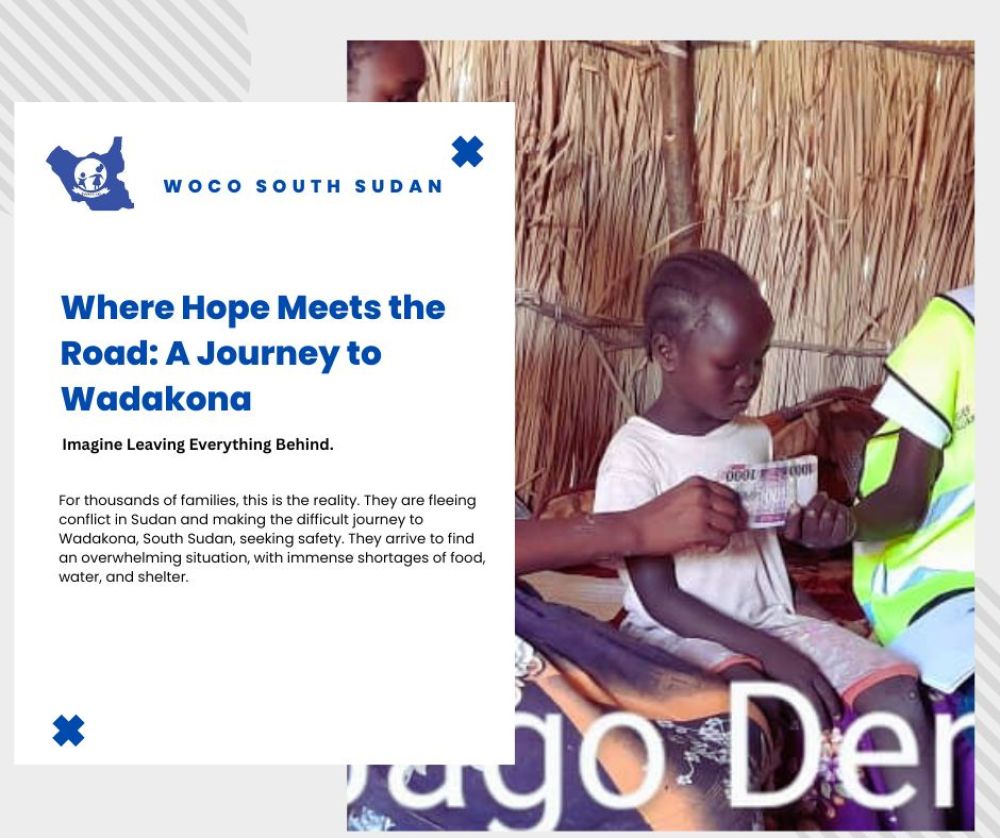
What happens when home is no longer safe? For tens of thousands fleeing the escalating conflict in Sudan, the answer is a long and perilous journey south. They arrive in places like Wadakona Payam in South Sudan, carrying little more than the weight of what they’ve lost.
Since last year, the local Relief and Rehabilitation Commission (RRC) in Manyo County has registered over 50,000 people just like this. The numbers are staggering, but they represent individual lives—mothers, fathers, and children—arriving to face immense challenges. They are met with shortages of food, clean water, shelter, and basic healthcare. The needs are simply overwhelming.
This is where our work begins.
We at the South Sudan Widows and Orphans Charitable Organization (SSWOCO) have an ongoing presence in this region, and we see the human faces behind the numbers every day. We see the exhaustion and the fear, but we also see incredible resilience. And it’s that resilience we aim to support with a proposed three-month rapid response project.
Our plan is focused on two of the most fundamental human needs: emotional safety and physical well-being.
First, we address the invisible wounds. Conflict is deeply traumatizing, especially for the young. Our mobile teams will travel to where people are, providing psychological first aid for all who need it. We will create safe, child-friendly spaces where kids can just be kids again, a place to heal through structured support. For the 150 unaccompanied or separated children we are currently targeting, our goal is simple and profound: to reunite them with their parents or a primary caregiver.
At the same time, we will provide tangible support to restore a sense of dignity and normalcy. This means distributing clothes and underwear to 300 adolescent girls and women. It means giving 350 vulnerable families, especially those caring for separated children or those with disabilities, plastic sheets for shelter, sleeping mats, and soap. And for 50 of the most vulnerable caregivers, it means providing cash assistance, empowering them to make their own choices to meet their family’s most urgent needs.
This isn’t just about handing out supplies. It’s about looking another person in the eye and showing them they are not forgotten. In coordination with local leaders and other partners on the ground, we are working to ensure this aid reaches those who need it most.
The journey to Wadakona is one of hardship, but it does not have to end there. Together, we can make it a place where the road forward begins, paved with compassion, dignity, and a renewed sense of hope.


